Showing posts with label 1950s. Show all posts

Friday, November 24, 2023

Not Expecting That!


I hope everyone had a nice Thanksgiving and will have a stress-free Black Friday!

It's definitely the time for Christmas music and with that in mind, I've been checking to see what's new and what's been reissued.

An interesting find is a  collection called "1950's Christmas Classics" in three volumes, which is available on Amazon and probably some other services.

Lurking behind that unassuming title (and artwork) we find mostly pretty deep cuts from the RCA Victor and Columbia families of labels rather than the same familiar (but great) tracks that get reissued all the time. Some good stuff!

In any event, I was surprised to find that Volume 3 includes "Bah! Humbug" by Bob Corley, which I featured way back here!

Also included in Volume 3 is "Chinchy Old Scrooge" by Phil Moore!

Go find this collection!

A nice present and "Bah! Humbug!" totally holds up! 


Friday, October 6, 2023

You Learn Something New...

...Most days anyway!

So I was playing the game CodyCross on my phone and came across a clue that went something like "Infamous executioner used by Charles II."

The answer was "Jack Ketch" as shown below:


I start thinking that I don't really know who that is, so I do a little research and find some gruesome details.

But what surprised me was that in addition to Charles Dickens namedropping Jack Ketch in several novels, the name pops up in the movie "Scrooge" from 1951!

In the Christmas Past scene, Mr. Jorkin says that young Scrooge and Marley could "skin Jack Ketch alive and he'd never know they'd done it."

I always thought he said "Jack Scratch" along the lines of Old Scratch, meaning the Devil.

But now I know!

Friday, July 21, 2023

What Would TT Think?

I wonder what TT Cratchit would think of this:
Would he think he was being visited by ghosts?

Saturday, January 14, 2023

Still Searching!

Still looking for this sheet music, or even just a higher resolution scan:


Just thought I'd mention that.

Hey, let's hear the record again:     


Turns out "Billboard" wasn't too keen on it:


Humbug to them!

Wednesday, December 28, 2022

"The Adventures of Ozzie and Harriet" (December 19, 1956)


"The Adventures of Ozzie and Harriet"
"The Busy Christmas" (December 19, 1956)
Director: Ozzie Nelson
Scrooge: Ozzie Nelson

The long-running TV series "The Adventures of Ozzie and Harriet" had a number of Christmas episodes and they've been gathered into the nifty collection at the top of the page!

It's nice to see the series get a makeover, as there have been rough looking copies of episodes popping up for years.

Of particular interest to us is the 1956 episode "The Busy Christmas," in which one of the activities that keeps Ozzie busy is portraying Ebenezer Scrooge in a local production of "A Christmas Carol!"

We get to see a bit of the play, as seen here in this very unrestored clip:


Grab a copy of the DVD set and have some holiday fun with the Nelsons!

Monday, December 12, 2022

How Did I Miss That?

OK, so with the amount of yammering I do about 1951's "Scrooge," you'd think I know everything about it!

Not quite!

The girls really want to hear that pudding!


While watching it again for the umpteenth time last night I noticed that when Peter Cratchit brings Tiny Tim to listen to the pudding "singing in the copper," he says, "You come too, Mary and Belinda!"

Mary is ready to chow down!


I knew the "small assorted Cratchits" did not include the non-Peter, non-Tim son, but how did I not notice that this version gives a name to the non-Martha, non-Belinda daughter?

Now I know!

Friday, June 3, 2022

You Don't Say!

Here's a fun press photo showing Fredric March and Christopher Cook on the set of "Shower of Stars" in 1954:


What's often wacky, though, are the captions. This one reads:

LOS ANGELES - OCTOBER 1: CBS television special holiday presentation, Chryslers Shower of Stars, adaptation of Charles Dickens A Christmas Carol. Pictured Left to right: Fredric March (as Ebenezer Scrooge) and Christopher Cook (as Tiny Tim, a crippled boy). December 23, 1954. Los Angeles, CA. Image dated October 1, 1954.

It's funny that they feel the need to explain the Tiny Tim character, but not Ebenezer Scrooge! Thanks for letting us know!

And I don't get the dates at all!

Monday, April 25, 2022

The Caltex Theater - "Scrooge the Miser" (195?) - Part 3


So, how does "The Caltex Theater" presentation of "Scrooge the Miser" compare to "A Christmas Carol" itself?

(We'll have to presume that John Crane's adaptation for radio is close to Eric Jones-Evans's play.)

Actually, despite it having a different title, "Scrooge the Miser" is quite faithful to the book, using chunks of the text as dialogue, but there is one huge difference...

That huge difference being that Scrooge is only visited by one spirit: Marley's Ghost!

Marley's Ghost shows Scrooge the past, present and future just like those respective spirits would, so I really wonder why Eric Jones-Evans made that choice unless it was to make a stage production of the play easier to manage.

The script really doesn't take a lot of liberties otherwise, but let's take a closer look at the proceedings.

There's no narrator, so it's left to the characters to have some expository dialogue which works just fine.

The opening scene in the office is pretty typical with one difference being that Scrooge tells Bob to come in on Christmas morning to finish up an invoice. That's similar to the 1958 Vanguard Records recording with Siobhan McKenna, but who knows which came first?

Also reminiscent of that album is that it seems Scrooge's office and living quarters are in the same building, as soon as Bob leaves, Scrooge settles down with his bankbooks and falls asleep. So no door knocker!

Marley's Ghost wakes him up and gives him the usual warning, then explains that he will conduct him to the past, present and future.

Marley's Ghost just has a couple of scenes from the past to show Scrooge. They see young Scrooge at school and they talk about Fan coming in, but we don't hear her. Marley's Ghost says that Fan died shortly after the birth of Scrooge's nephew "Frederick." That echoes the 1951 Alastair Sim movie "Scrooge" but the book itself doesn't specify how or when Fan died, just that she was a woman and had one child.

They also witness Scrooge's breakup with Belle.

That's all for the past, but Scrooge is already regretful and seems well on his way to repentance. I always miss Fezziwig if he's not included, though!

Since they don't have to switch spirits, Scrooge and Marley's Ghost get to Christmas Present and Bob's house pretty quickly. Before they go in, Marley's Ghost needles Scrooge about Bob's low salary and Scrooge is too humbled to disagree.

The Cratchit family Christmas dinner is the only scene from the present, but what's kind of odd is that they fade in and out from it. Scrooge has to ask Marley's Ghost to show him more a couple of times.

No Ignorance and Want, so Scrooge and Marley's Ghost go straight to Christmas Yet to Come, which gets the most scenes.

Since Marley's Ghost is still handling things, he talks about what they're seeing, dropping hints that would be spoilers if Scrooge were quicker on the uptake!

They see a couple of businessmen talking about Scrooge's death, interestingly saying "The Devil got his own" in case we don't know who Old Scratch is!

The scene at Old Joe's place is also similar to the one from that 1958 Vanguard record in that it's only Mrs. Dilber as the charwoman who has all of the items.

Curiously, Old Joe is wary of buying the items as he knows they were stolen. This version of Old Joe has scruples?

They next return to the Cratchit house after Tiny Tim's death. It's always a bit clunky in versions such as this where Bob mentions running into Fred and how it seems as if Fred knew Tiny Tim when the opening scenes show Bob and Fred as being well-acquainted with Fred asking about Tiny Tim's health. 

In the book it's clear that Fred had only met Bob the one time in Scrooge's office on Christmas Eve, so Bob's words about Fred in the future make more sense.

Anyway, Scrooge sees his own grave and begs for another chance.

He then awakes in his own room, saying it was a dream. That always bugs me because although in this version they don't see a lot of visions, there are still details about the Cratchit family he wouldn't know and thus wouldn't be able to dream about.

I can understand to an extent as Scrooge was asleep when Marley's Ghost appeared, but still!

Everything is set up for the ending, which is handled much better than on that 1958 record I keep referring to!

Scrooge confirms with a passing boy that it's Christmas and dispatches him to buy the turkey. He also spots the charity guy across the street and has the boy send him over, allowing Scrooge to make a donation.

Since Scrooge is already in the office building, he's waiting with the turkey when Bob shows up late for work. He pretend to be  angry but gives Bob the turkey, raises his salary and offers to help Tiny Tim.

Bob invites Scrooge to Christmas dinner, but Scrooge respectfully declines, explaining that he'll join him next year but this year he's going to Fred's house. Scrooge quotes Tiny Tim and we're done!

This ending reminds me quite a bit of the final scene of Basil Rathbone's 1942 recording (which was on Christmas afternoon) and it's equally touching.

All in all, except for just the one ghost, the whole thing is a faithful and entertaining adaptation!


Sunday, April 24, 2022

The Caltex Theater - "Scrooge the Miser" (195?) - Part 2


If you got the chance to listen to "The Caltex Theater" broadcast of "Scrooge the Miser," I'm sure you'll agree it's a good production!

There's something of a mystery about the date of the broadcast, Ã  la that AFRTS show with Otto Kruger as Scrooge, but not as much mystery as that Mystery Broadcast!

I don't know much about Australian radio shows and I've barely heard of Caltex, but I thought it would be easy to do an internet search and find a list of "Caltex Theater" shows and dates. But, nope!

The best guess seems to be that it's from the 1950s, but as I look for clues, I come away more confused than before!

If we listen carefully to announcer Ric Hutton, we get a few breadcrumbs...


One thing we hear is that "Scrooge the Miser" is a new play by Eric Jones-Evans, so it should just be a matter of determining when it was published.

That wasn't as easy as I thought either, but I found a couple of references to 1962, including this title page:


I'd be willing to go with 1962 as the year of the broadcast, except for one big but...

Another key is that we know the part of Scrooge is played by John  Alden (who does a great job).


Now, you say "John Alden" to an American and we would most likely think of the pilgrim who was in the love triangle with Priscilla Mullins. But radio wasn't invented yet in the 1620s, so this would be a different John Alden!


A quick search does reveal that there was an Australian actor named John Alden who appeared on the radio in addition to his stage roles. Fair enough, but this gentleman passed away in November 1962.

So, the "Caltex Theater" show can't be from 1962, as he wasn't around for Christmas of that year. And even if the show was prerecorded, they wouldn't broadcast it as is, with Mr. Alden taking a curtain call and all.

And we're back where we started - a mystery!


Saturday, April 23, 2022

The Caltex Theater - "Scrooge the Miser" (195?) - Part 1


"Scrooge the Miser" (195?)
The Caltex Theater
Scrooge: John Alden

We run across another mystery broadcast of sorts. A mystery at least as far as the date. Maybe from the mid-1950s?

We do know that it's "Scrooge the Miser" from the Australian radio series "The Caltex Theater" and that it's good!

Give it a listen:

Next: The mystery!

Sunday, April 3, 2022

Bonus Movie - "tom thumb" (1958)!


Another movie I recently caught on TCM was 1958's "tom thumb" starring Russ Tamblyn as the pint-sized title character.

It's not a bad movie, although it seems pretty dated.

What struck me was that there seemed to be an unusually high number of the cast and crew that were connected to versions of "A Christmas Carol" and/or other projects of note.

The cast supporting American star Russ Tamblyn is mostly British, so maybe it's not too surprising.


Tom's parents are played by Bernard Miles and Jessie Matthews, who pop up here a lot.


Bernard Miles had that 1960 recording on which he played Scrooge, but his performance here reminds me more of his role as "Joe Gargery" in David Lean's 1946 version of "Great Expectations." 


I don't think that Jessie Matthews ever appeared in a Dickens adaptation, but she did co-star with Barry MacKay in three movies in the 1930s, as I frequently point out!

"tom thumb" is 20 years later and Jessie's about 50, but she's still attractive. Her character gets a song and it sounds like Jessie singing, but some (all?) of it was apparently dubbed by future Lawrence Welk "Champagne Lady" Norma Zimmer.


The romantic leads are played by Alan Young and June Thorburn, who also have some interesting connections.


Alan Young, who kinda seems too old for this part, was, of course, the voice of Scrooge McDuck on the original album and animated short "Mickey's Christmas Carol."


And June Thorburn, a very lovely actress who tragically passed away in a plane crash at age 36, had a small role in the 1952 adaptation of "The Pickwick Papers," which also featured Barry MacKay!

"tom thumb" was directed by George Pal, who was famous for his Puppetoons shorts featuring stop-motion animation and Tom interacts with various toys in that style.


One of the toys is the Yawning Man who is voiced by Stan Freberg, who played a modern Scrooge on his brilliant Capitol Records single "Green Chri$tma$" from 1958!

That's three Scrooges!


Also of note is that a couple of songs from "tom thumb" were written by the team of Janice Torre and Fred Spielman, the talents behind "The Stingiest Man in Town" - pretty cool!

You know, I'd almost say I enjoyed making these connections more than I did the movie itself!

Thursday, March 31, 2022

"General Electric Theater" - December 15, 1957


"The Trail to Christmas" (December 15, 1957) 
"General Electric Theater"
Director: James Stewart
Scrooge: John McIntire

We keep going with Jimmy Stewart for just a bit longer as we come across an episode of the ""General Electric Theater" TV series from 1957 titled "The Trail to Christmas."

Apparently the episode is a reworking of "Britt Ponset's Christmas Carol" episode from "The Six Shooter" radio series!

The show still exists, but it's not available for viewing right now, but we'll see what happens.

James Stewart directed the episode and relates the western version of A" Christmas Carol" as a character named "Bart" (he was Britt now he's Bart, so not exactly like the Maverick brothers!).


The Scrooge role is enacted by John McIntire, the veteran character actor (he had appeared in "Winchester '73") who gained his greatest fame when he replaced the late Ward Bond as wagonmaster on the long-running TV series "Wagon Train" starting in 1961.

The "Jake Marley" character is played by Will Wright, another character actor with a lot of credits, including appearing on "The Six Shooter" radio series. His best-known Christmas-related role is as Ben Weaver, the Scrooge-like store owner in the 1960 Christmas episode of "The Andy Griffith Show." 

We last saw him here, drinking punch with Ozzie Nelson while Ricky sang "Jingle Bells!"

The most intriguing casting, however, would be Sally Fraser as Belle. If that seems familiar, it's because she played Belle opposite Fredric March in the 1954 "Shower of Stars" adaptation. That can't be a coincidence!

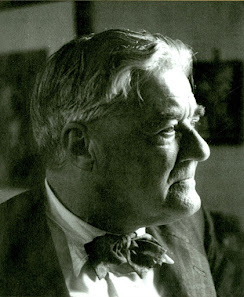
Hopefully this show becomes available at some point. The rights may have something to do with the host of "General Electric Theater" shown at the top of the page.

Isn't he the guy who portrayed Grover Cleveland Alexander in 1952's "The Winning Team" with Doris Day? Did we ever find out what happened to him?


Wednesday, March 30, 2022

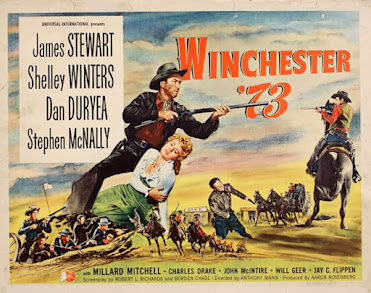
Bonus Jimmy Stewart - Winchester '73!


I had mentioned when discussing James Stewart's radio series "The Six Shooter" that the actor had within the past couple of years prior adopted a somewhat grittier persona in a series of westerns beginning with "Winchester '73" in 1950.

"Winchester '73" happens to be one of my favorite movies ever and I like his characterization of Lin McAdam, the protagonist, a lot.

The Britt Ponset character from "The Six Shooter" makes me think that's what Lin McAdam would be like if he rode around having adventures. A pleasant fellow with a strong moral compass who doesn't look for trouble but does what he needs to do.

To his credit as an actor, Jimmy Stewart did not bring that same characterization to every western he made. In fact, he's a little different in each one with multiple levels of shading.

Here's the trailer for a re-release of "Winchester '73":


Makes me want to watch it again!


I notice that Millard Mitchell doesn't get mentioned in the trailer, but I think he steals the movie as Jimmy's saddle pal High-Spade.

Unfortunately, Mitchell had passed away in 1953, which was probably before this reissue.

For more fun, here's the "Lux Radio Theater" adaptation from November 12, 1951:


Good to hear Jimmy Stewart and Stephen McNally reprising their roles from the movie and interesting to hear Julia Adams in the Shelly Winters role. Lots of solid radio actors in support, including William Conrad and Bill Johnstone.

I would say that if you haven't seen the movie yet, do so before you listen to the radio adaptation!


Tuesday, March 29, 2022

"The Six Shooter" (December 20, 1953) - Part 3


A few words about the cast of "The Six Shooter" episode "Britt Ponset's Christmas Carol" and some other things...

The series ran on NBC for one season of 39 episodes from 1953-1954 and it came along at kind of an interesting time.

Television had been making serious inroads by this point and the biggest effect was that if people were watching TV, they were no longer listening to the radio.


So, one thing that radio tried was having stars such as James Stewart headline shows. He was a big movie star at the time, so it's not like he needed the work.

Another trend was for shows to be transcribed, i.e. recorded in advance, which allowed the stars to work on the shows on their own schedule, as opposed to needing to block out a set time for a live broadcast.


Also, by 1953 Jimmy Stewart had become comfortable in the western movie genre. He was a non-traditional hero in his first western, "Destry Rides Again" (1939), but established a rugged new persona with his next western, "Winchester '73" (1950).

So, add it all up and we have Jimmy Stewart in a transcribed western radio show!

As expected, he does a great job on the show with his unmistakable voice and deceptively folksy demeanor.


The announcer on "The Six Shooter" was Hal Gibney, and if his name wasn't familiar, a lot of people knew his voice as the announcer for the radio and TV versions of "Dragnet." You know, "...Only the names have been changed to protect the innocent..."


For this particular episode, announcer Gibney tells us that Scrooge was played by Howard McNear. He was a busy radio actor, appearing as Doc on "Gunsmoke" at this time, but was later best-known for his role as Floyd, the nosy Mayberry barber on "The Andy Griffith Show" TV series.


No one else is credited, but the voice of the Johnny character is easily recognizable as that of Dick Beals, who was 26 years old at the time, but did a great kid voice for a really long time, not unlike Walter Tetley. 


When I hear that voice, I immediately think of Davey from "Davey and Goliath," whose voice Dick provided up through 1965's "Christmas Lost and Found." He also had a long run voicing "Speedy Alka Seltzer" for TV commercials.

Dick Beals also popped up in 1953 as the window boy in Lionel Barrymore's 1953 broadcast of "A Christmas Carol" on the "Hallmark Hall of Fame." Have we listened to that yet?

We're fortunate that every episode of "The Six Shooter" survives and it's still great entertainment!


Monday, March 28, 2022

"The Six Shooter" (December 20, 1953) - Part 2


If you got the chance to listen to the "Britt Ponset's Christmas Carol" episode of "The Six Shooter" radio series, I'm sure you'll agree that it's actually fairly straightforward adaptation!

If you haven't heard it yet but would like to, you should go back and listen, as there are some SPOILERS regarding the framing story. 

The set-up of Jimmy Stewart's Britt Ponset character telling the story to a young boy named Johnny allows the story to follow the typical plot points with a western twist rather than having a "real" Scrooge-like character within the show's universe undergo a similar conversion. I think that approach works really well.

Johnny's aunt is actually a bit Scroogey until she has a change of heart, even though she's not the one that hears the story!

In any event, Britt's version of the story is pretty faithful to the book, just transplanting it to the western United States.

The Scrooge character is generally just referred to as "Eben," but we do learn that his full name is "Ebenezer Scrooge" when he sees it on his tombstone. He's a wealthy rancher here.

The Bob Cratchit stand-in is named "Bob" with a son named "Tim" and the Jacob Marley character is "Jake," but we don't hear their last names. And Belle is still Belle, but she's the schoolmarm!

I don't think any of the other characters are named.

The biggest change plot-wise is that Bob, Eben's ranch foreman, lives with his family in a shack on one of the ranches and Eben demands that he tear it down, on Christmas Day, which would leave the family homeless. 

This establishes the Scrooge character as really mean and heartless as opposed to just a miserly businessman.

This does allow for a nice moment at the end when Eben goes out to the shack on the morning after Christmas, feigning anger at Bob for not having torn down the shack, but surprising him by telling him the reason the shack needs to go is so Eben can build a house for Bob and his family!

There's one other change that might be unique to this version, which occurs in the future sequence. Among the people reflecting on Eben's death are Belle and her husband! 

I don't recall otherwise ever hearing (or seeing) their scene in the future.

A fun bit concerns the Christmas party at the house of Eben's nephew. The game the guests play is pin the tail on the donkey, with said donkey having Eben's face. The best part is that when Eben goes to the party on Christmas in "real" time, he insists that they use that they still use that donkey for their game!

The whole thing's a lot of fun and it hits the right emotional notes as well!

Sunday, March 27, 2022

"The Six Shooter" (December 20, 1953) - Part 1


"The Six Shooter" (December 20, 1953)
Director: Jack Johnstone
Scrooge: Howard McNear

It seems like a good time for an old-time radio adaptation of "A Christmas" (although it's always a good time)!

Here's one with a western twist from the NBC show "The Six Shooter," as broadcast on December 20, 1953.

The episode is called "Britt Ponset's Christmas Carol."

Give it a listen:


Pretty cool!

Sunday, February 6, 2022

"A Christmas Carol" - Vanguard Records (1958) - Part 4


So, after a reasonably thorough examination of Vanguard Records' adaptation of "A Christmas Carol" from 1958, the question is how does it rate?

I try to look at such questions from a few different perspectives.

First, how does it work strictly from an adaptational standpoint? Does it capture the flavor of the source material? Can you write a book report from it?

I think it does a pretty good job, but it has too many omissions of important events, especially considering it suns for more than 50 minutes.

The past sequence leaves out young boy Scrooge at school and apprentice Scrooge at Fezziwig's, which are vitally important as these sequences teach Scrooge some valuable lessons. And if this version was to be your introduction to the story, you'd be unaware of some iconic scenes. and wouldn't get a good grade on your book report!

I don't really mind all that much that the end sequence is changed a bit, as that happens in a number of versions, but I don't think it's handled well.

So, this adaptation does not meet the book report test! 

This leads to the next question, which is if you're already familiar with the story and don't mind a few changes, is it entertaining to listen to?

I think it is, as it's well-produced and well-acted. I don't think, however that it has any extra oomph to set it apart from the many other versions, especially those with a "star" Scrooge like Lionel Barrymore, Ronald Colman or Lionel Barrymore.

And I always try to think of how an adaptation compares to others from its general time period.

There were a few albums from around the same time as this one, although this is ahead of the crowd, having been released in 1958.

Right away, I think this one is better than the Frank Pettingell version that followed in 1959, but not as good as the Ralph Richardson version from 1960.

The fair fight is between this one and the Bernard Miles version from 1960. This one works better as an adaptation, but the Miles version offers a more varied listening experience.

Bottom line is that I find this recording interesting and worth a listen, but it's not definiivte.

Saturday, February 5, 2022

"A Christmas Carol" - Vanguard Records (1958) - Part 3


Now it's time for the inevitable breakdown of the script for Vanguard Records' audio dramatization of "A Christmas Carol" from 1958!

The whole shebang runs a little less than an hour, so there's plenty of time to cover all the major plot points, but as with many versions, it has many curious omissions.

The record starts off with a prologue by Irish radio commentator Ronnie Walsh to set the mood. It doesn't use anything from the original text, but that's OK.

He does say that the story takes place in 1842, so that would be a year before the book was published.

The first scene in Scrooge's office is pretty much as expected, with visits from Fred and, in this case, one charity collector.

Scrooge actually calls Fred by his name here, not just "Nephew," but the bigger change is that the portly gentleman identifies himself as Mr. Goodman, an importer of teas. This makes him a fellow businessman and not a full-time charity collector.

Despite these changes, the script uses a lot of the familiar dialogue from the book, which is never a bad thing!

The biggest difference overall in this first scene is that Scrooge tells Bob Cratchit that he must report to the office on Christmas morning at 9:00 to work for a couple of hours, rather than giving him the whole day off.

Scrooge also instructs Bob to put his gruel on the fire and put his slippers there to warm, which implies that Scrooge's office and living space are in the same building. So, apparently Scrooge is going back there after his dinner and the knocker is on the office door.

Whatever the case, Marley's Ghost arrives and has the usual banter with Scrooge.

By this point, Scrooge is describing a lot of the action as it's happening, putting me in mind of Basil Rathbone's recording from 1942.

The Ghost of Christmas past comes along and only has one vision for Scrooge, which is the breakup scene with his former fiancée, who is named Emma here.


Emma seems like a suitable name to me, with its echoes of Jane Austen and all, but I always wonder why various versions pick the names they add/or change.

As I mentioned, this is the only scene from the past that Scrooge is shown. The spirit does say, "One shadow more," but Scrooge refuses to see it and the spirit does not compel him to see Belle/Emma with her family as in the book.


As far as that goes, it reminds me quite a bit of a similar scene in "Mister Magoo's Christmas Carol," but this record predates the TV special by four years and I wouldn't imagine it was an influence on it.

Unique to the record and very intriguing is that Scrooge asks the spirit if she will return and she answers affirmatively, indicating she will return on the next night.

Indeed, when the next spirit appears, she is also voiced by Siobhan McKenna and Scrooge recognizes her but notes that she now wears a wreath of holly.

So, it's apparently the same spirit now representing the present, although the spirit does not identify herself as the Ghost of Christmas Present (shades of the George C. Scott version!). She does later say she's the "Spirit of Christmas," however.

This makes the introductory exchange between Scrooge and the spirit somewhat awkward, as dialogue is lifted from the book to include the spirit asking Scrooge if he's seen the like of her before, to which Scrooge says he has not. But, he did - last night!

I realize that they want to make as much use of Ms. McKenna as they can, but the script could have used a bit of tweaking.

As in the past, there's only one scene for Scrooge to see and it's the Cratchit family's Christmas dinner.

This is often a highlight of many versions and it's well represented here, taking up about a quarter of the whole thing.

We even get to hear Tiny Tim's song, which in this adaptation is "The First Noël." 


Tiny Tim's delivery puts me in mind of the way the kids sang "The First Noël" in the 1965 Davey & Goliath special "Christmas Lost and Found" (which is awesome!), but that's probably just me!

One thing to note is that Scrooge has apparently met Bob's family before as he knows about Tiny Tim and remarks that Peter has grown since the last time he saw him.

I do realize that a lot of Scrooge's dialogue is for expository purposes, but I think that any adaptation that shows that Scrooge was already aware of Tiny Tim's condition loses a bit of impact, as Scrooge should already have been a least bit somewhat concerned instead of only becoming concerned when seeing this vision.

Oh, and I think Mrs. Cratchit calls the usually unnamed Cratchit son "Tom" but does not say the name of the other, non-Martha, non-Belinda daughter!

Scrooge does see Ignorance and Want before this spirit departs.

The Ghost of Christmas Yet to Come appears and calls out "Ebenezer Scrooge!" twice before clamming up and not saying anything else.

I'm thinking they had her call out to Scrooge just so they could say that Siobhan McKenna played all three spirits, but it strikes me as awkward that this spirit refuses to answer Scrooge's questions when it has been established that she/it can talk!

The spirit brings Scrooge directly to the establishment of old Joe and Scrooge actually knows who Joe is! Again, I realize that it's due to Scrooge needing to speak a lot of expository dialogue, but it's interesting.

Odder still is that only the charwoman enters Joe's shop. She calls herself Mrs. Dilber, which we know is the name of the laundress, but whatever. That's not the odd part!

The odd part is that she brings three different bundles, the other two (in addition to her usual bed curtains and whatnot) being the bundles usually brought by the laundress and the undertaker's man. Joe opens each bundle separately and gives an accounting of each one separately, using dialogue from the book.

I don't know why it's done that way instead of having a couple of the actors voice the laundress and undertaker's man, as it's easy enough for voice actors to double up.

Scrooge then says that he wants to see some emotion caused by his death, then some tenderness connected with a death, as he does in the book, but if the spirit does show him these things, we do not partake in them!

We just hear some eerie music and Scrooge saying he has leaned his lesson and doesn't need to see anything else. But the spirit brings Scrooge to a churchyard anyway.

There he sees Tiny Tim's grave as well as his own and notes that Tim's is well cared for and his own is not.

So, Scrooge wakes up on Christmas morning and jumps around and all and engages the boy outside the window to buy the prize turkey and deliver it anonymously to Bob Cratchit and says he'll get in touch with Mr. Goodman to make a charitable donation.

Despite some of the changes that have led to a bit of awkwardness, the script so far has been pretty faithful to the book. But from this point on, things get very clunky!

The problem is that Scrooge had told Bob Cratchit that he needed to work on Christmas morning. So, the business of Scrooge arriving at the office ahead of Bob in order to surprise him takes placed on Christmas morning, rather than the day after.

Usually Bob's excuse for being late is that he was "making rather merry," which is fun. But here he says he was up late helping Mrs. Cratchit prepare the Christmas dinner, which just seems lame.

But Scrooge raises Bob's salary and says he will help his struggling family and that they'll discuss it that afternoon over a Christmas bowl of smoking bishop and all, just like in the book, but that just doesn't make sense that he'd meet with Bob on Christmas afternoon, pulling him away from his family.

So, Scrooge sends Bob home and says he'll see him later in the day.

The tone of the whole thing changes now as the narrator reappears with some jaunty music to tell us the scene is now the Cratchit house after dinner (presumably having eaten the prize turkey) and we hear a little speech from Bob about the new year. Then the narrator (and music) comes back to tell us that Fred and his "winsome wife" have dropped in.

It strikes me as odd to have the narrator return suddenly after having only given the prologue before. Why didn't we have him set some other scenes instead of having Scrooge spout so much expository dialogue?

And what makes Bob and Fred such good friends? It's not particularly established that they know each other well, such as was the case in the 1938 MGM movie version.

Things get so incredibly awkward when Scrooge shows up at the Cratchit house and everyone seems surprised to see him, including Bob. And Bob then acts surprised when Scrooge says he help his family.

Now, keep in mind that Scrooge had already met with Bob earlier that day and raised his salary and said he see him later. Wouldn't Bob had told his family this good news when he got home? You'd think he would mention Scrooge was different (and would be dropping by)! He would at least have to explain why he came right back home rather than needing to work for a couple of hours.

Scrooge also namedrops Fezziwig, saying he knew how to celebrate Christmas, but within the confines of this record, we have no idea who Fezziwig is.

When Bob offers Scrooge "a glass," Scrooge declines, saying he's had enough of spirits to last a lifetime, which is a good line, but everyone laughs uproariously as if they got the joke, but they should not have any idea what he's talking about.

This whole final scene is just very strange and not particularly well-handled.

Scrooge ends the record by using more text from the book and suddenly it's done. Totally cold ending with no music or anything. I think the narrator should have come back with the jaunty music to close it out to give it a little more balance.

OK, so what's the final verdict?

Friday, February 4, 2022

"A Christmas Carol" - Vanguard Records (1958) - Part 2


If you got the chance to listen to the 1958 dramatization of "A Christmas Carol" from Vanguard Records, I'm sure you found it interesting.

Before discussing it, just a few words about the cast, which consisted of members of the Dublin Theatre, as per the album cover.


The most prominent name is Irish actress Siobhan McKenna, who portrays the three Christmas spirits and gets her picture on the cover!

I'm reasonably familiar with her, as she was in a few movies, most notably 1965's "Dr. Zhivago" and 1961's "King of Kings," in which she played Mary. She was mainly a stage actress, however, and well-known as such in 1958.

I think she does a good job on the album, but isn't really used that much.


Scrooge is played by Anew McMaster, who was almost exclusively a stage actor, appearing in only one small, un-billed part in one movie, 1960's "Sword of Sherwood Forest," a fun flick featuring Richard Greene's Robin Hood vs. Peter Cushing's Sheriff of Nottingham!

I do think McMaster is a slight bit hammy as Scrooge, perhaps a result of his normally working on the stage, but he does the heavy lifting here and is effective.

I understand that although he styled himself as Irish native, he was actually born in England with the first name of Andrew!


The only other actor from the album that I recognize is Milo O'Shea, who plays old Joe. He wasn't too well-known in 1958, but had a long career lasting into the 2000s in which he popped up in a lot of movies as well as TV dramas and sitcoms.

He had a particularly interesting year in 1968 with featured roles in the movies "Romeo and Juliet" and "Barbarella" (he was Durand-Durand)!

I think its a good cast that performs well!

Next: What kind of a script did that cast get to perform?